
☰

The questions worth asking before you sign with anyone — including us.
We'd rather a family choose the right planner for them, even if that's not us, than choose the wrong one because a portfolio looked good on Instagram. A wedding planner has more access to your money, your family's trust, and your wedding day itself than almost any other vendor you'll hire — so the interview process deserves more rigour than most couples give it. Here's what we'd genuinely recommend asking anyone you're considering.
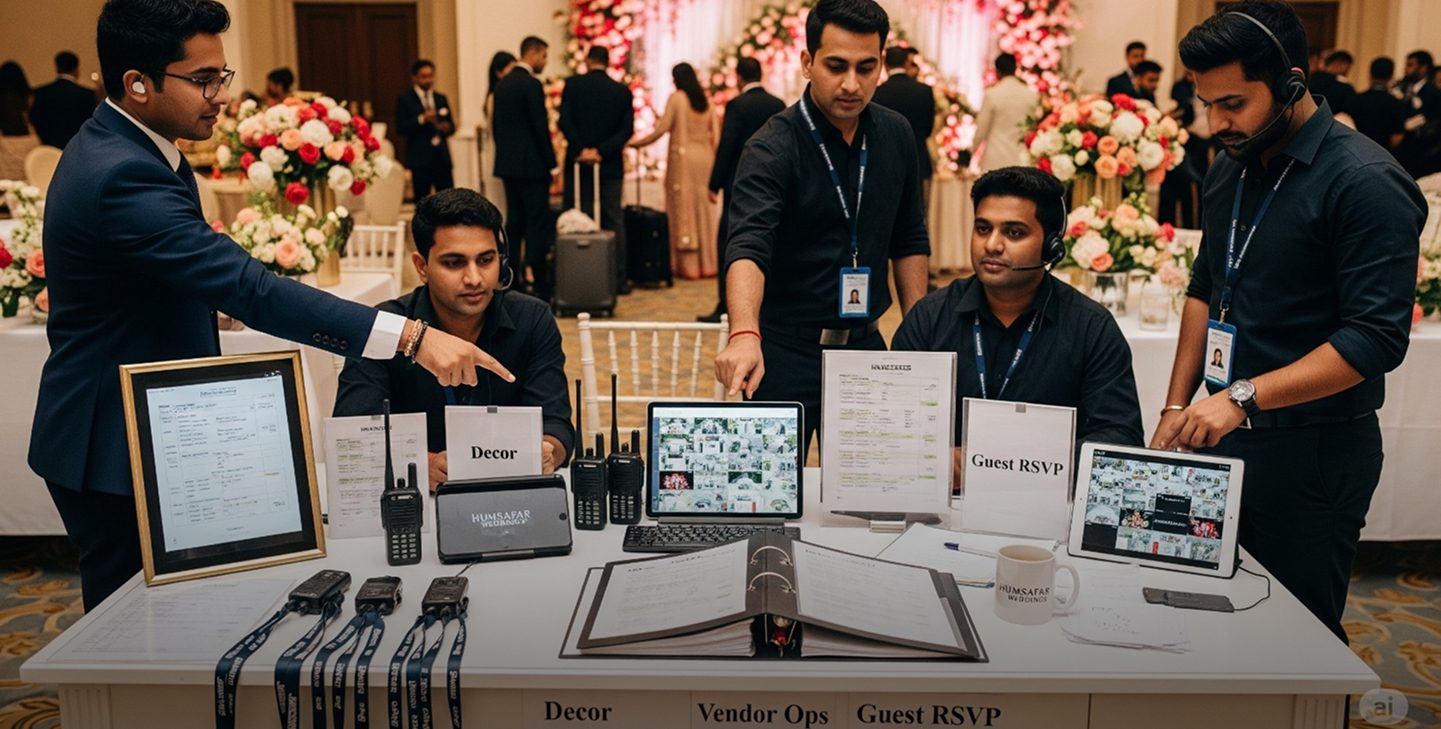
A beautiful pitch deck can be presented by senior leadership and still be executed on the wedding day by a team you've never met. Ask specifically who your on-ground point of contact will be, whether you'll meet them before the event, and how many other weddings that same team is running in the same week. A planner juggling three weddings in one weekend simply cannot give any of them the attention a single dedicated team can.

Every wedding has at least one unexpected problem — weather, a delayed flight, a vendor issue, a last-minute guest change. A planner's answer to "walk me through a time something went wrong and how you handled it" tells you far more than their answer to "what's your design style." Vague or defensive answers here are worth noticing; a planner who's confident in their process will usually tell you the story in detail, including what they'd do differently.
"A planner's answer to 'what went wrong on a past wedding' tells you far more than their answer to 'what's your design style.'" Humsafar Wedding Planning Team
A planner who's excellent at 100-guest intimate weddings isn't automatically the right fit for a 500-guest multi-day celebration, and the reverse is just as true — a team built for scale can sometimes over-produce an intimate wedding that was meant to feel personal. Ask for references from weddings closest in size and style to what you're planning, and actually call them. A five-minute conversation with a past client usually surfaces more than an hour of reading testimonials on a website.

A few patterns are worth pausing on, regardless of how good the portfolio looks. Pricing that seems unusually low compared to every other quote you've gathered is worth questioning rather than celebrating — it's often made up later in undisclosed vendor commissions. A request to pay the full amount upfront, with no staged payment schedule tied to milestones, is a real red flag; a legitimate planning business structures payments around planning stages, not around getting paid before the work starts. And vagueness about vendor pricing transparency — whether you'll ever see the actual vendor invoices, or only a marked-up total — is worth pressing on directly before you sign anything.
A good planner should welcome every one of these questions without hesitation. If a team gets defensive answering them, that's useful information too — and far better to learn it before you've signed anything than after.
Ask us every question on this list — we'd rather earn the fit than assume it.
Start the Conversation