
☰
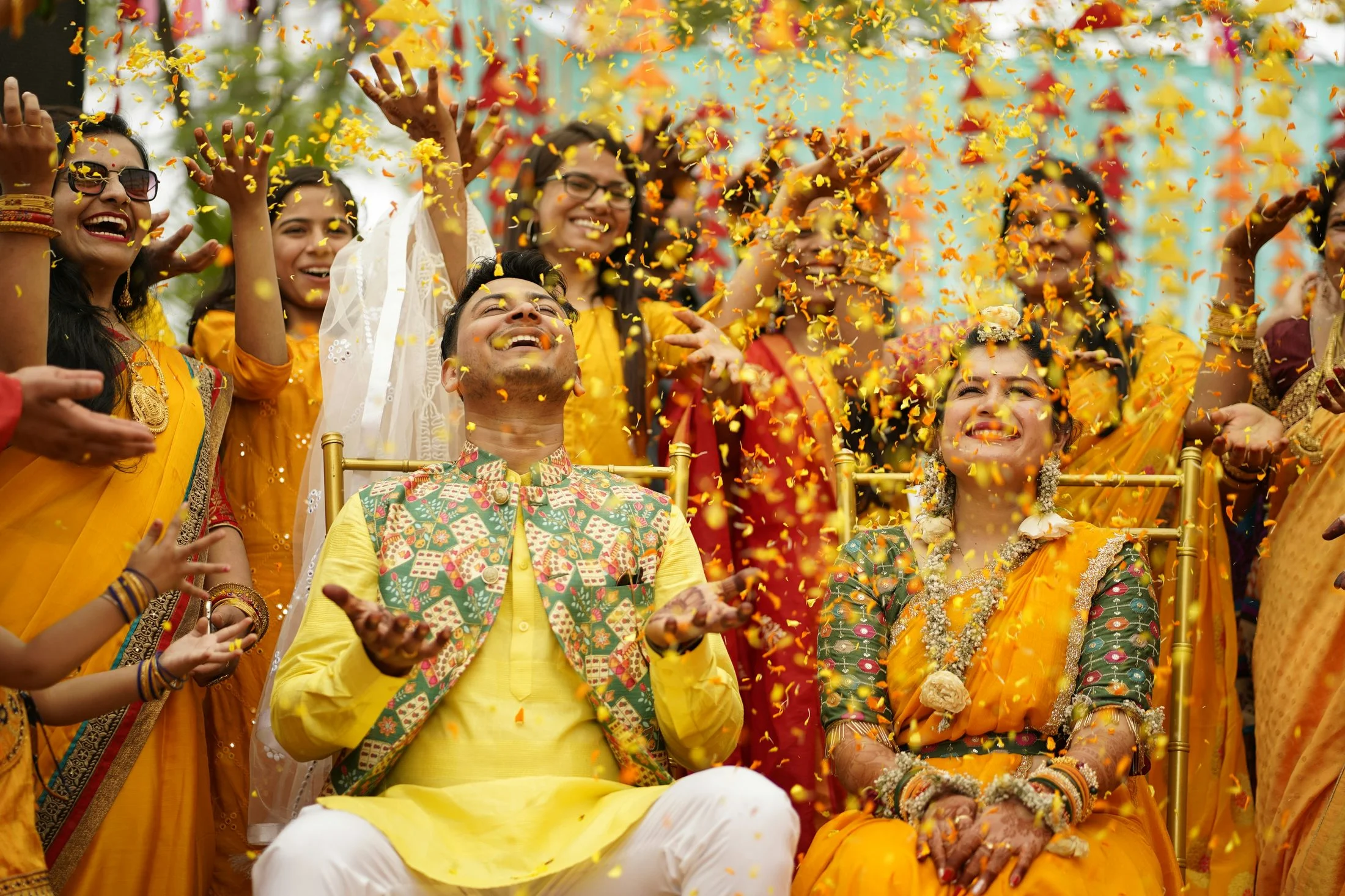
Fresh takes on two of the most fun days of any Indian wedding — and why less choreography sometimes means a better party.
Mehendi and sangeet are usually the days couples enjoy planning most, and also the ones most likely to feel like a repeat of every wedding they've attended — the same stage shape, the same lineup of cousin performances, the same DJ set list in a slightly different order. Here are a few directions we've been steering our clients toward this season, along with why they tend to work better than the defaults.
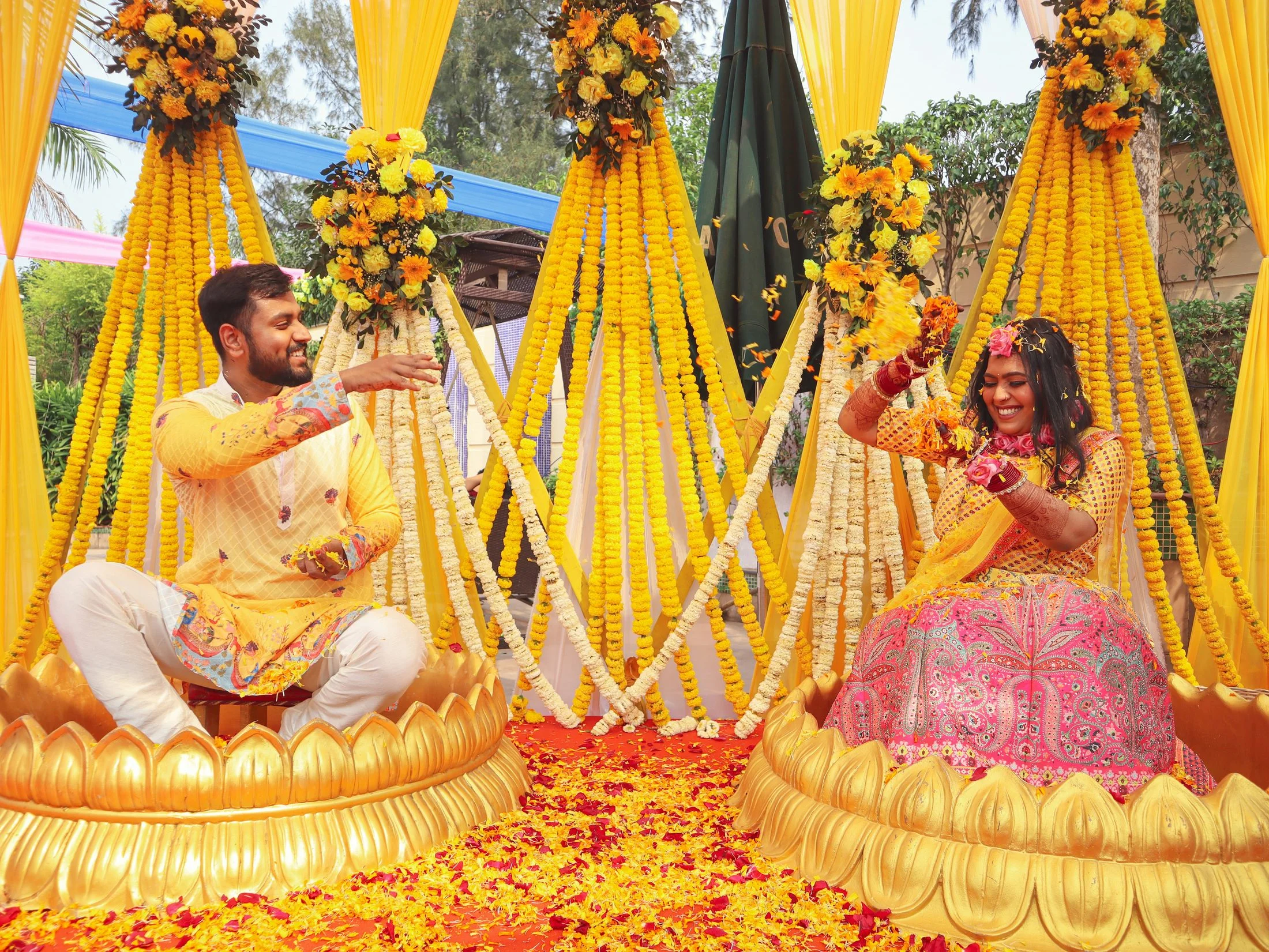
Instead of building an elaborate stage, we've had consistently good results with low floor seating, oversized floor cushions, and a simple canopy — letting natural light and a relaxed layout carry the day instead of a heavy structural build. It also happens to be far more practical: mehendi artists move between low seating clusters far more easily than they can around a raised stage, and guests actually mingle instead of clustering in front of a single focal point waiting for something to happen. We've started scheduling a live folk or acoustic set at low volume for the same reason — present, not performative.
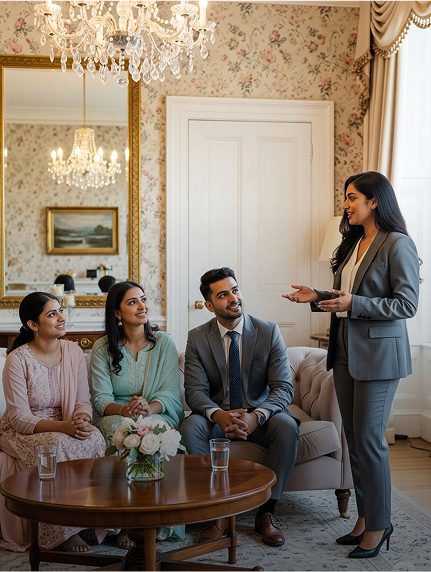
We're seeing families move firmly away from a long lineup of every relative's individual dance and toward three or four well-rehearsed group performances instead — one from each side of the family, one from the couple's close friends, and a joint one from the couple themselves, saved for the very end. It keeps energy high throughout instead of dipping during a fifth solo number, and it genuinely gives everyone more time on the dance floor afterward, which is usually what guests actually came for.
"Four rehearsed performances beat twelve unrehearsed ones, every time. The goal of a sangeet is a party the room joins in on, not a recital they sit through." Humsafar Wedding Planning Team
Both days lean casual, so we design the food to match: chaat counters, live paratha stations, and dessert carts consistently work better than a formal seated dinner, and they keep guests mingling instead of anchored at assigned tables for the whole evening. For later-running sangeets, a midnight snack station — something simple like mini sliders or a late chaat cart — tends to get more genuine enthusiasm than anything on the main menu.
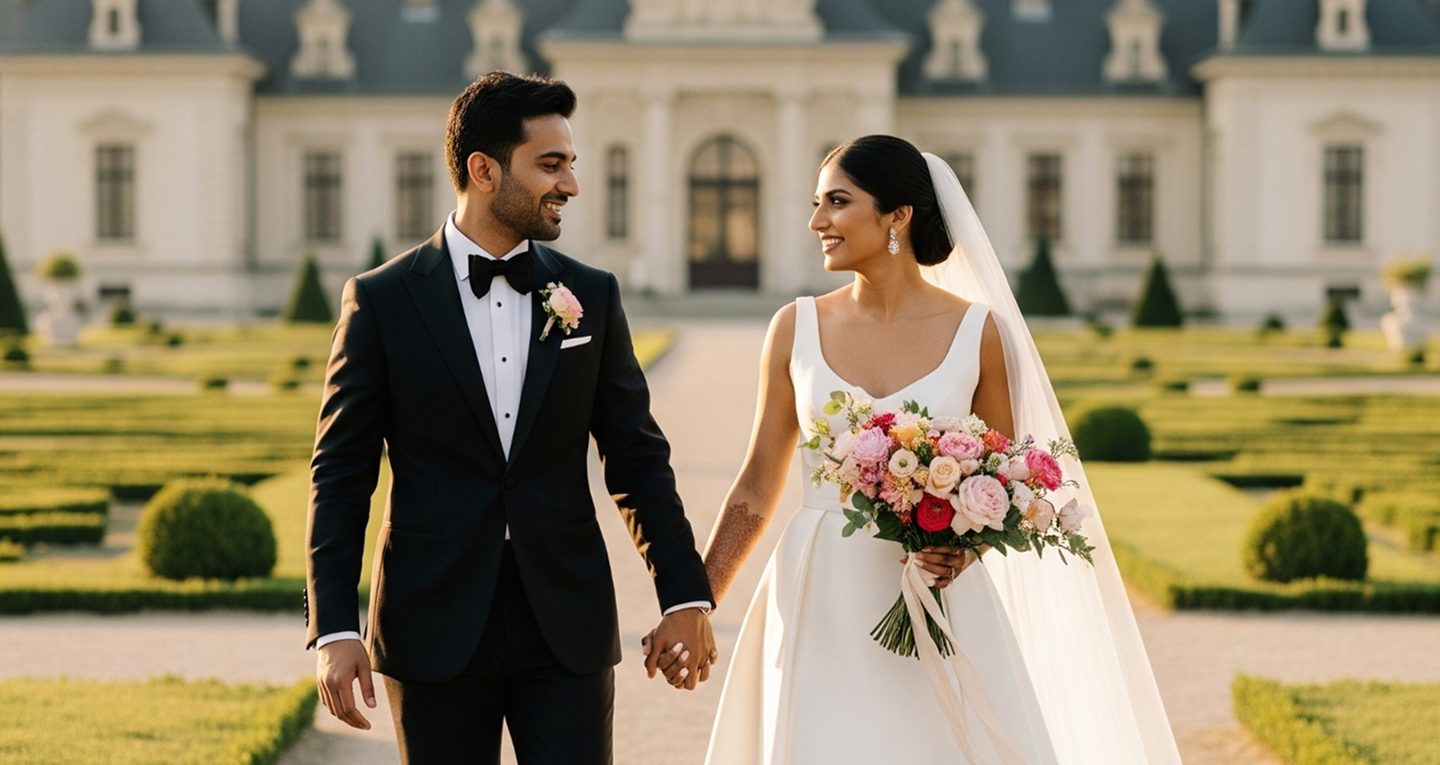
One detail that gets overlooked: the order events run in matters almost as much as the events themselves. We generally plan performances early in the evening while energy and attention are highest, hold the couple's own joint number for the close rather than the open, and leave open dance time as its own unstructured block rather than squeezing it between segments. A sangeet with clear structure early and genuine freedom later tends to be the one guests talk about the next morning.
The best mehendi and sangeet days we've planned all share one thing: they feel like a party the family is genuinely having, not a performance they're putting on for guests. That's the standard we design toward, and it usually means doing less, more deliberately, rather than trying to fit everything in.
Tell us the vibe you're picturing — casual and floor-seated, or something with more production — and we'll build the run sheet around it.
Start the Conversation