
☰
From our design team's current favourite directions — and the ones we've quietly retired.
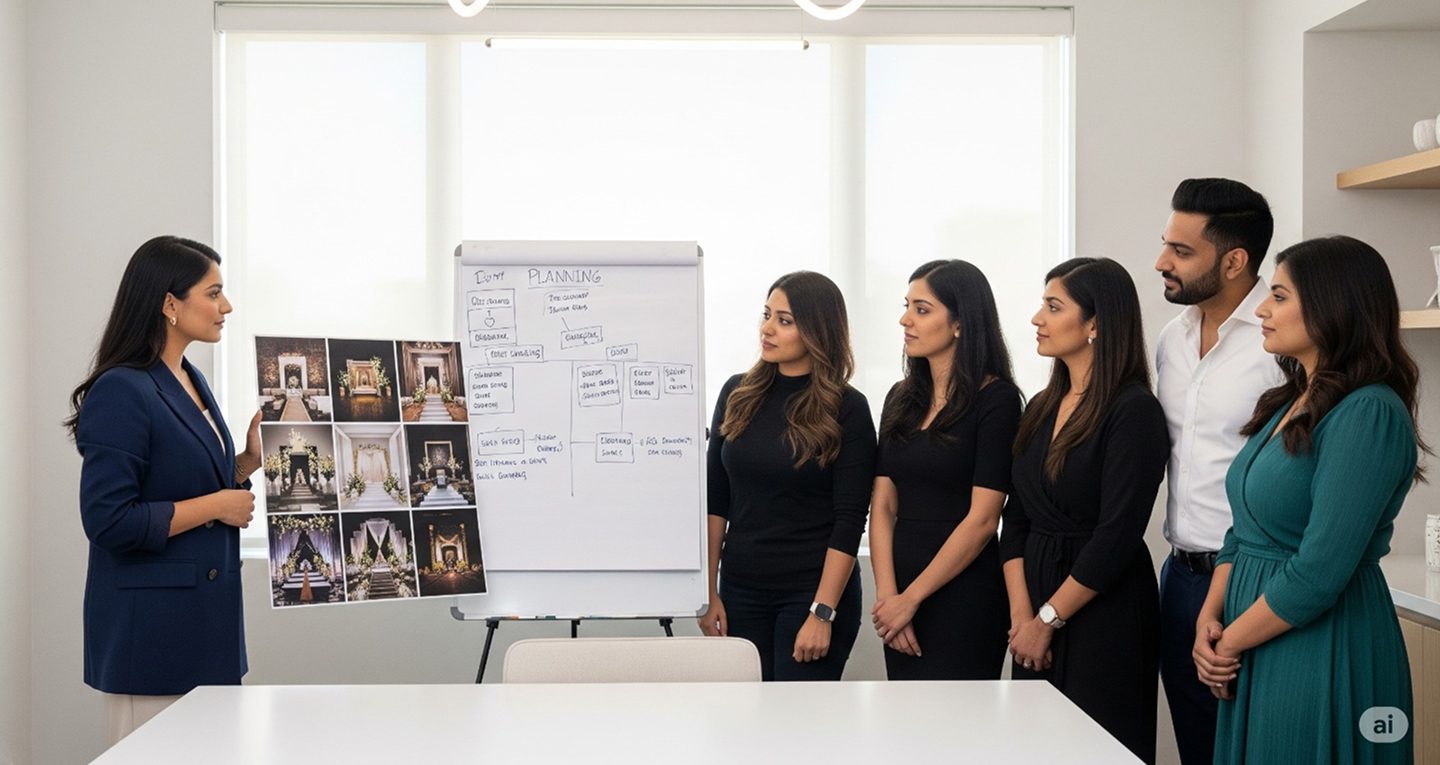
Our design team reworks its moodboards every season, but a few directions have stuck around long enough now that we'd call them genuine shifts rather than passing moments. Some of it is aesthetic. Some of it is practical — driven by what actually survives a humid evening, a windy courtyard, or a six-hour build day. Here's what's shaping the mandaps and reception spaces we're building right now, and a couple of things we've started saying no to.
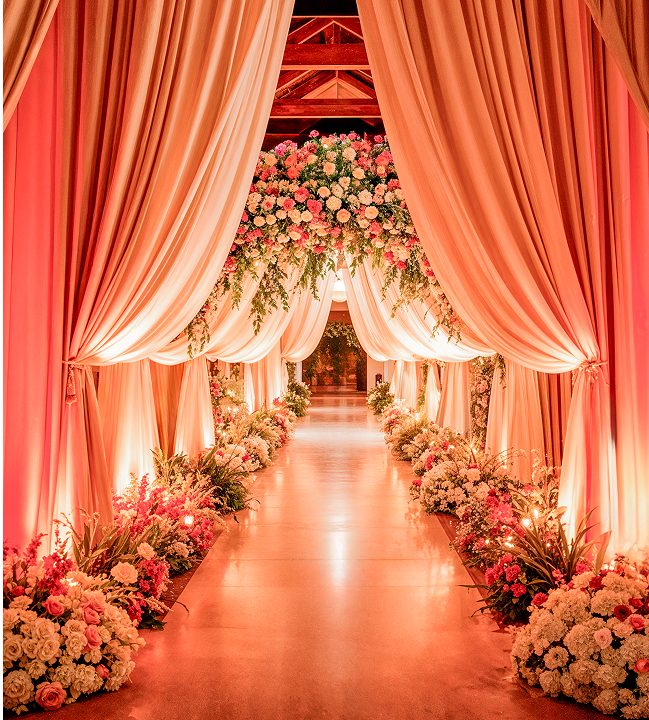
Instead of a flat floral wall behind the mandap, we're building dimensional, architectural floral structures — arches that extend overhead, layered installations that create depth from multiple camera angles rather than just the one straight-on shot. This takes considerably more rigging and a longer build window, sometimes two full days instead of one, but it photographs completely differently: guests standing under it experience the structure from inside, not just as a backdrop they're posed in front of.
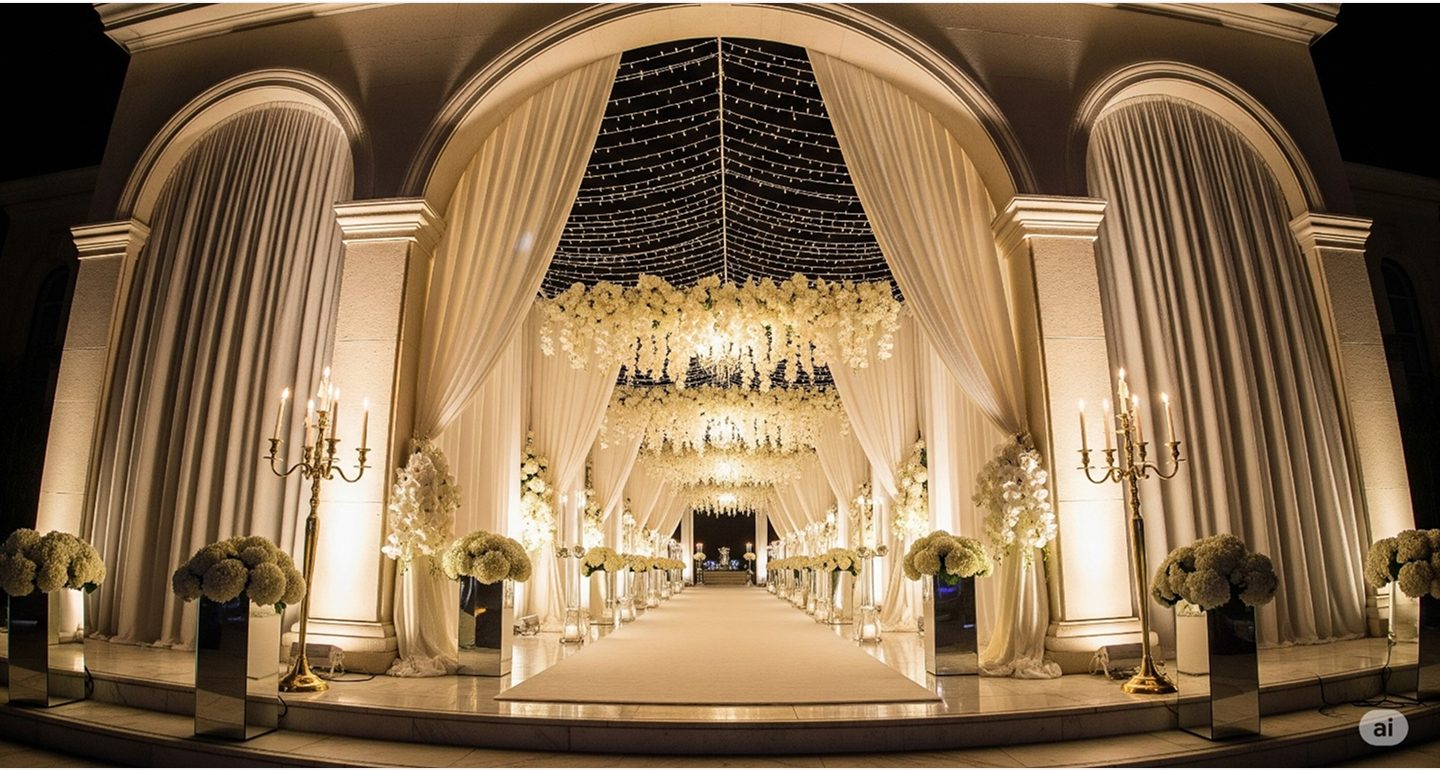
Lighting has become as important as the floral budget on many of our recent projects, and it's usually the first thing we now scope alongside décor rather than after it. Layered warm-toned lighting — uplighting hidden inside structural elements, soft pendant clusters overhead, and candlelight at every guest table — does more to shape the mood of a space than décor volume alone ever could. A well-lit simple mandap consistently outperforms an elaborately decorated one lit flat and bright.
"Give us the lighting budget before the floral budget. We can make a modest décor plan look extraordinary with the right light. We can't do the reverse." Humsafar Wedding Design Team
Rather than choosing flowers first and matching everything else to them, more of our design briefs now start with a specific heirloom or bridal textile — a banarasi saree border, a family's traditional bandhani pattern, a groom's sherwani fabric — with the entire palette built outward from it: florals, table linens, even the gels on our lighting rigs. It's a more constrained way to design, but constraint tends to produce more cohesive, less generic results than an open colour brief does.
A newer request we're fielding more often: mandaps built primarily from drapery, metalwork, or carved wood rather than fresh flowers — either for sustainability reasons, climate practicality in very hot destinations, or simply because a family wants something more architectural and less perishable. Done well, a brass-and-drape mandap with a single concentrated floral accent at the centre can feel just as considered as an all-floral structure, at a fraction of the flower spend and with zero risk of wilting in desert heat before the ceremony even begins.
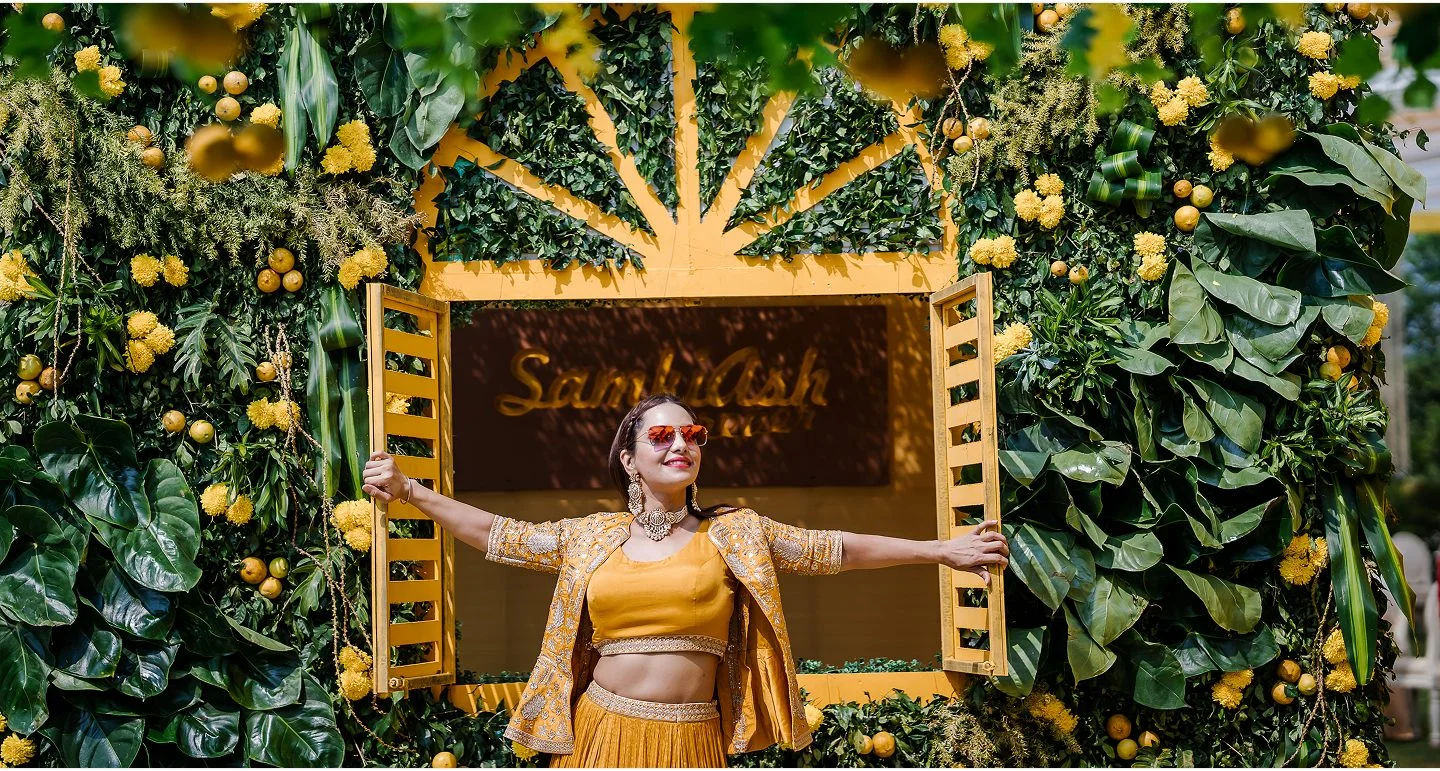
Not every past favourite has aged well. We're moving away from oversized single-colour balloon installations, which read as generic regardless of the wedding's actual style, and from décor that's designed purely as a photo backdrop with no relationship to the rest of the venue. Our design conversations now start with the whole space, not one wall.
Good décor design should support a wedding's story, not distract from it. These are the directions currently helping our team do exactly that — and the ones we expect to still be building around this time next year, unlike a few we've already left behind.
Bring us a textile, a colour, or just a feeling — our design team will build the rest around it.
Start the Conversation