
☰

Smaller footprint, same celebration — the changes that actually matter, and the ones guests never notice.
More couples are asking us how to reduce the environmental footprint of their wedding without turning it into a compromise on beauty or scale. The good news, after planning a fair number of these: most of the changes that matter most are also the ones guests notice least — in a good way. Sustainable choices, done properly, tend to look like better design, not a smaller wedding.
Locally grown flowers and regional materials cut down transport-related waste significantly, and in our experience often look more naturally suited to the venue than imported stock flown in and forced to match a colour brief. We also work with vendors who can repurpose structural décor — mandap frames, seating structures, lighting rigs — across multiple events instead of building entirely new sets for each one, which is one of the biggest single reductions in material waste across a multi-function wedding.
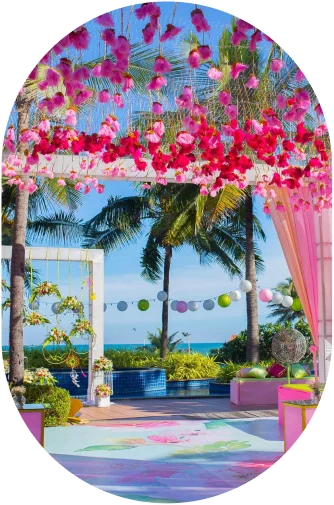
Cut flowers are often the single largest source of wedding waste, most of it invisible to guests because it happens after the event ends. We're increasingly building briefs around potted plants and living greenery that can be replanted or gifted afterwards, alongside seasonal, regionally grown blooms instead of imported stock that's flown in refrigerated and discarded within days. It photographs just as well — often better, since it's suited to the venue's own light and climate — and it dramatically cuts the post-wedding waste that never makes it into anyone's photographs.
"The most sustainable choice is almost never the plainest one. It's usually just the more locally suited, more intentionally sourced version of the same idea." Humsafar Wedding Design Team
Food waste is one of the largest, most overlooked impacts of a large multi-day wedding. Accurate RSVP tracking and portion planning — rather than defaulting to generous over-catering as a safety margin — meaningfully reduces waste without guests ever noticing a difference in the spread. We also work with caterers who can donate genuine surplus to local organisations rather than discarding it, which has become a standard part of our catering brief for larger weddings.
Digital save-the-dates, invitations, and day-of itineraries — with printed materials reserved for a small number of genuine keepsake items — cut paper waste substantially across a multi-day wedding with hundreds of guests travelling in from different cities. It also, in practice, makes coordination easier: a digital itinerary can be updated in real time when a function's timing shifts, which a printed card never can.

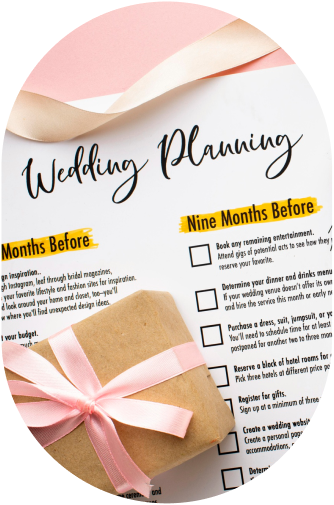
The part of sustainable planning couples think about least is what happens after the last guest leaves. We now build an end-of-event plan into the décor brief itself: which structural elements move to the next event on our calendar, which potted plants go home with the couple or get gifted to guests, and which materials can be donated rather than simply discarded. It's a small addition to the planning process that changes what the wedding leaves behind.
None of these choices ask a family to have a smaller or less beautiful wedding — they simply ask for more intentional sourcing and planning, which, as it turns out, tends to produce a more thoughtful wedding either way.
Tell our design team how far you'd like to take it, and we'll build the brief around it.
Start the Conversation