
☰
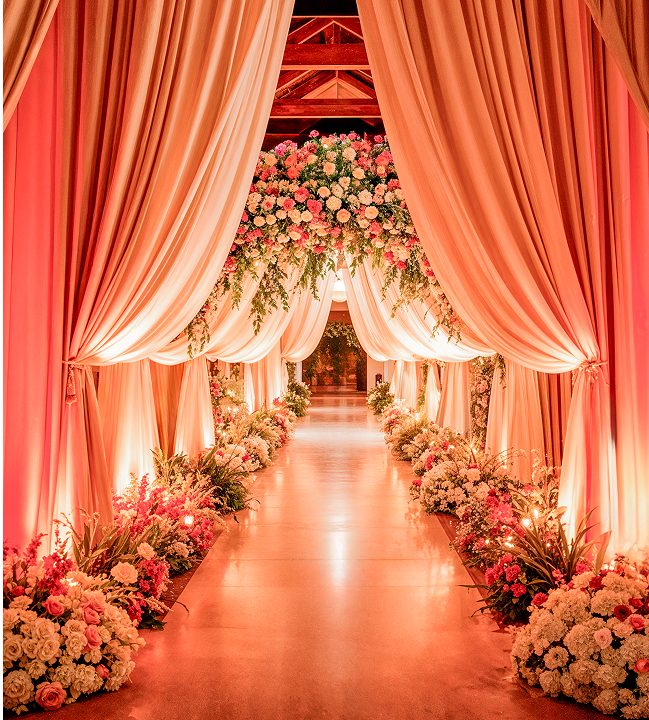
What we're actually hearing from couples in the planning room this season — and why it's changing how we design.
Every January, our design and planning teams sit down and talk through what we're actually hearing from couples in the room — not what's circulating on a moodboard app, but what real families are asking us to build for them. Across the weddings we're currently designing for 2025 and into 2026, one pattern keeps repeating: couples want their weddings to feel considered, not curated. They're pulling back from the idea that bigger automatically means better, and pushing us to make smaller decisions matter more. Here's where that shift is actually showing up on the ground.
The biggest structural change we're seeing isn't in colour palettes — it's in guest counts. More of our couples are deliberately trimming the list to 120–180 people and redirecting the budget they'd have spent on extra tables into fewer, sharper decisions: a photography team that shoots the whole week rather than just the main event, a live artist instead of a standard DJ set, one spectacular floral installation rather than florals repeated at every function. It isn't a smaller wedding in feeling — it's a more concentrated one.
We're designing more mandaps and stages around a family object rather than a Pinterest reference — a grandmother's saree border recreated in the backdrop embroidery, a great-grandfather's brass diya placed at the centre of the ceremony space, a father's handwriting from an old letter reproduced on the welcome signage. It's a shift from "what looks beautiful" to "what means something," and it's changed how our design team runs the very first client conversation — we now ask about family objects before we ask about colour palettes.
"It's no longer about replicating a trend board. It's about weaving the couple's own story into every element, from the colour palette down to the smallest design detail." Humsafar Wedding Design Team
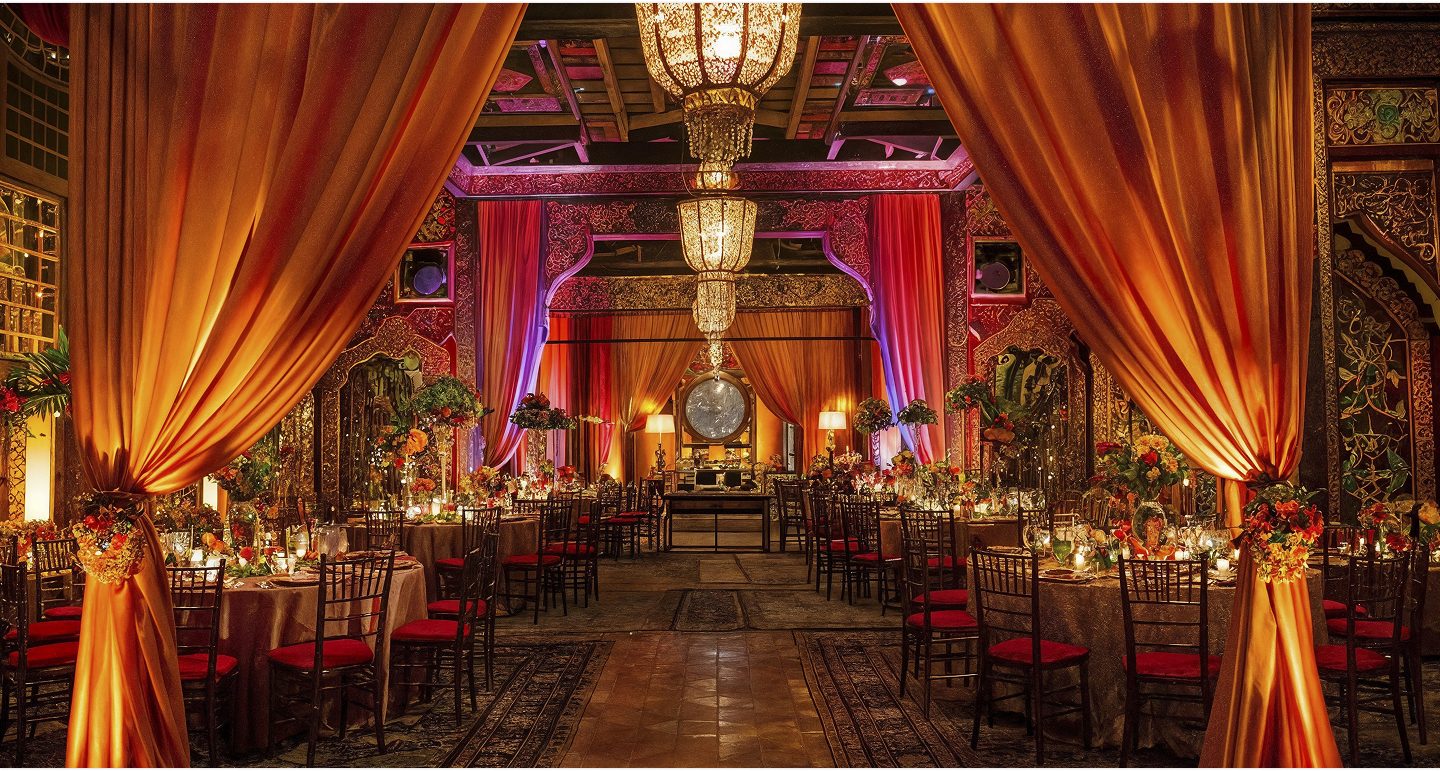
Where a few years ago couples wanted every hour of the wedding day accounted for, we're now building in deliberate gaps — an hour between the ceremony and reception with nothing scheduled at all, simply so the couple can eat a full meal and sit with their family before the next event begins. It sounds like a small thing to give up on paper, but it's consistently the change couples thank us for afterwards. A wedding that runs on a slightly looser clock reads as more relaxed in every photograph taken that day.
Instead of a generic multi-cuisine spread, more couples are asking us to build menus around a specific region tied to their own family history — a Konkani thali corner, an Awadhi live station, a dessert table built entirely around one grandmother's recipe. It takes considerably more coordination on our end, sourcing the right cooks and ingredients rather than defaulting to a standard banquet menu, but the response from guests is always the same: it's the part of the wedding people remember and ask about months later.
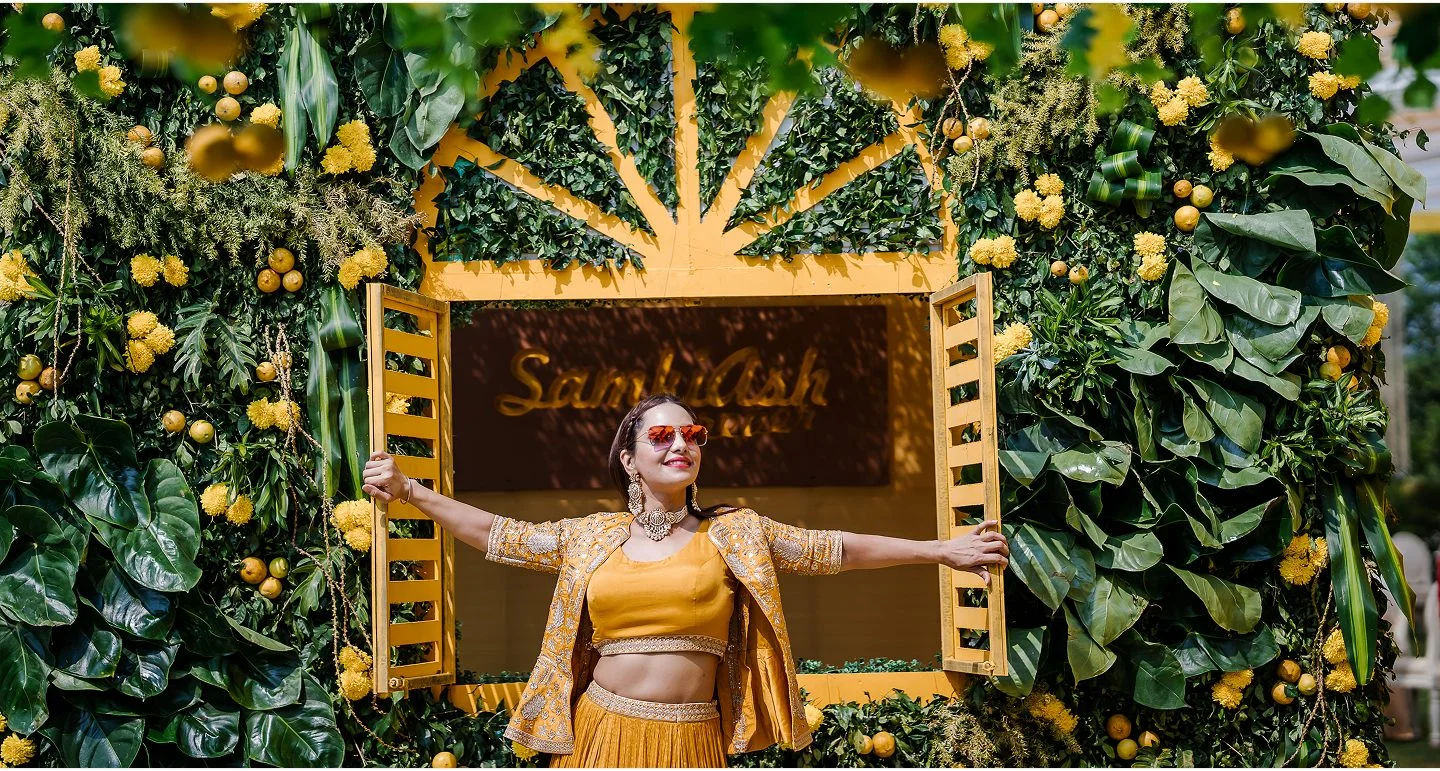
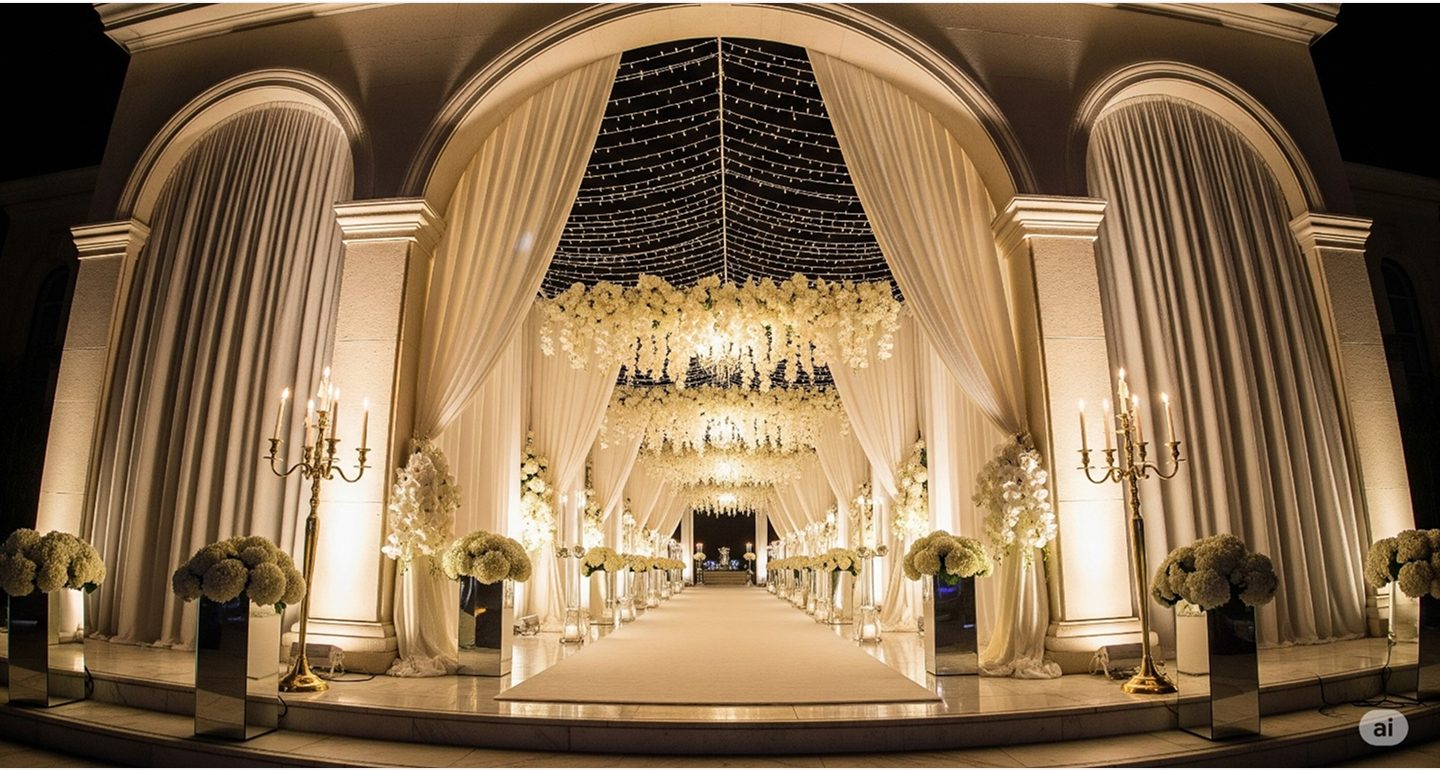
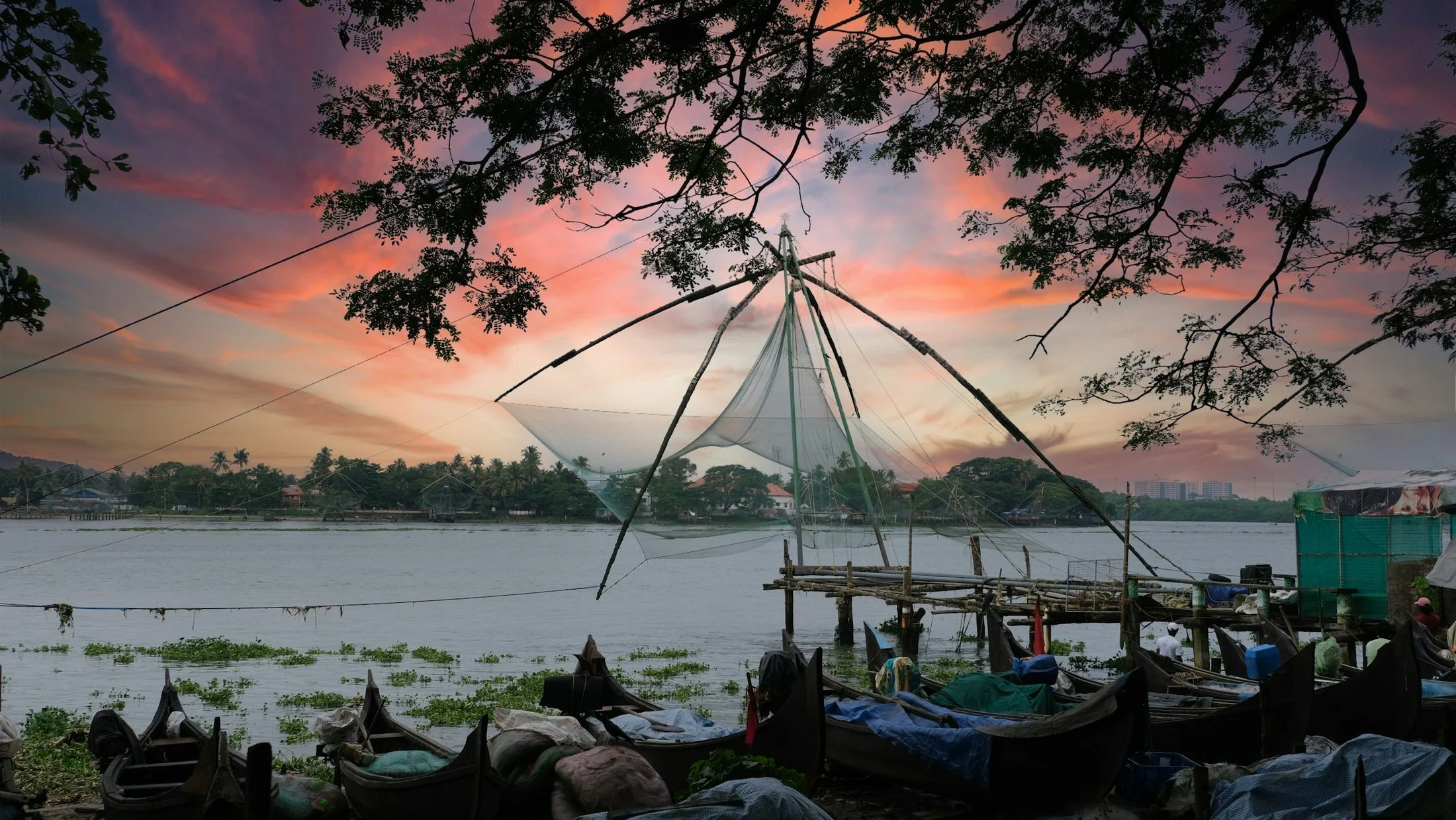
The classic Rajasthan palace or five-star ballroom is still very much in demand, but we're fielding a growing number of requests for weddings set against open landscapes — riverside lawns in Rishikesh, pine-forest clearings around Mussoorie and Shimla, shoreline temples near Mahabalipuram, backwater decks in Kumarakom. Couples are looking past the two or three most obvious Indian wedding destinations and asking us where else in the country can hold a celebration this size beautifully. It's changed our own scouting priorities as much as it's changed our clients' shortlists.
Environmentally conscious choices used to be a line item couples asked about almost apologetically. That's changed. We're now building entire design briefs around reusable structures, seasonal and locally sourced flowers, and projection-mapped visuals that create a grand look without the waste of a full temporary set build. It costs more to do this well than to default to disposable decor — and more of our couples are choosing to spend there anyway, because it's become part of how they want their wedding to feel, not just how it looks in photographs.
None of this is about chasing what's fashionable. It's part of a broader shift we're genuinely glad to see: couples treating their wedding as a reflection of their family's own story, with beauty as the outcome of that thinking rather than the starting point. If any of these directions sound like the wedding you're picturing, that's exactly the conversation our design team likes to start with.
Tell us which of these directions speaks to you, and our design team will build a moodboard around it.
Start the Conversation